
Asset
Chaparral · R.G. LeTourneau jack-up
Hull 33 · Class 300 · built in 1966 · IMO 8750704.
Experience case · retrospective reconstruction
A complex structure, read through the available evidence.
The photographic record and historical account inform a reconstruction of above-water dismantling. This reading separates documented information from retrospective interpretation.
Scope of this reading
Above-water structures only
This page and the 3D twin are not a signed execution design or field authorization.
Consolidated figures from own and consortium operations, supplied by management; they do not constitute an independent audit.
Five points to frame the reading before the evidence is examined in detail.
Chaparral · R.G. LeTourneau jack-up
Hull 33 · Class 300 · built in 1966 · IMO 8750704.
Structures above the waterline
The case does not attest to underwater dismantling or complete asset closure.
Document, four photographs and account
Each basis has its own scope and is identified in the traceability section.
Reported historical sequence
Cutting, rigging, tower crane, torch work and rope access are historical account, not an authorized procedure.
Retrospective reconstruction
The visual reading supports understanding; it is not a survey or engineering validation.
Documentary data for identification, separate from method assumptions and field outcomes.
Information extracted from a record or document identified in the archive.
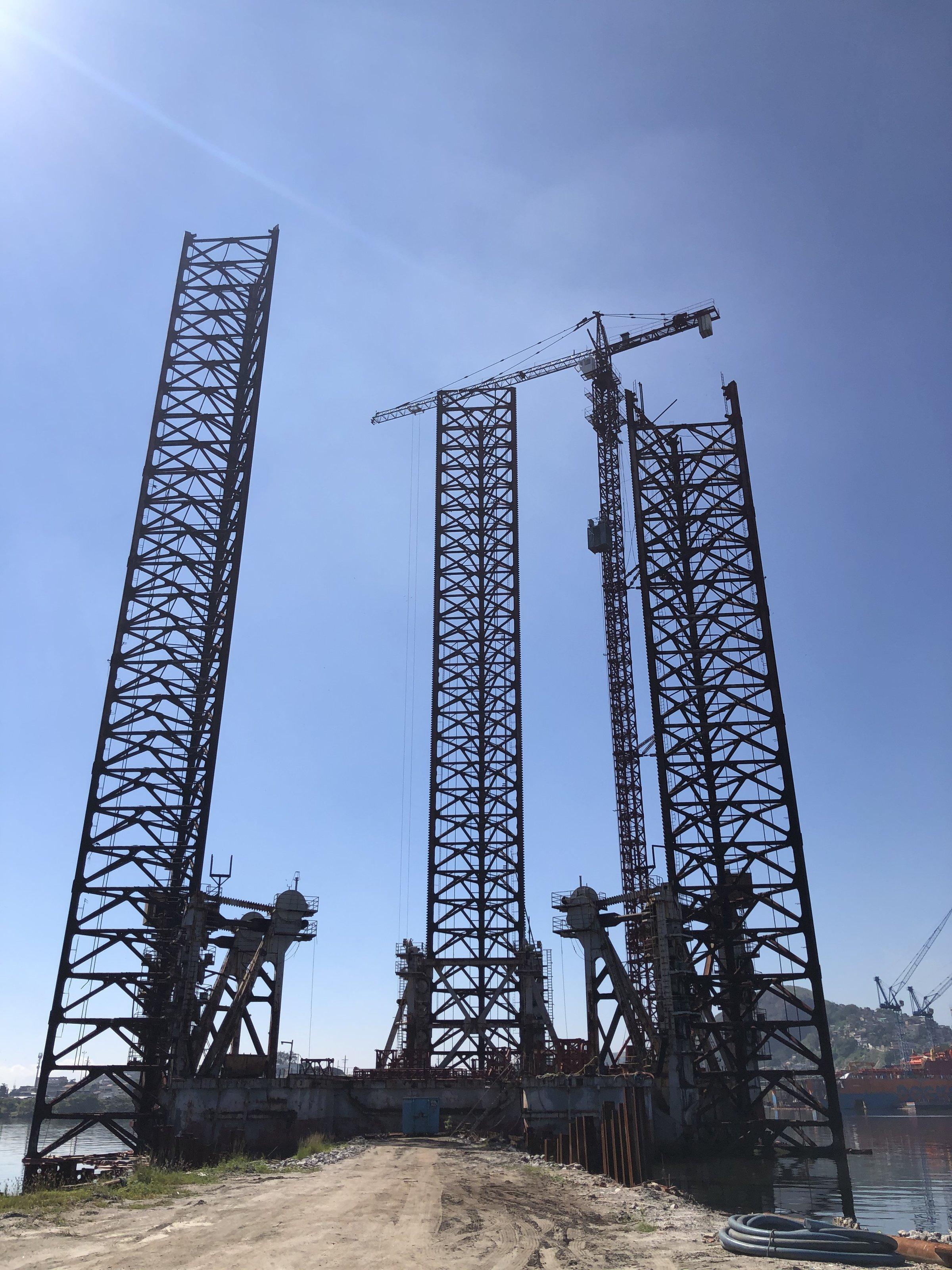
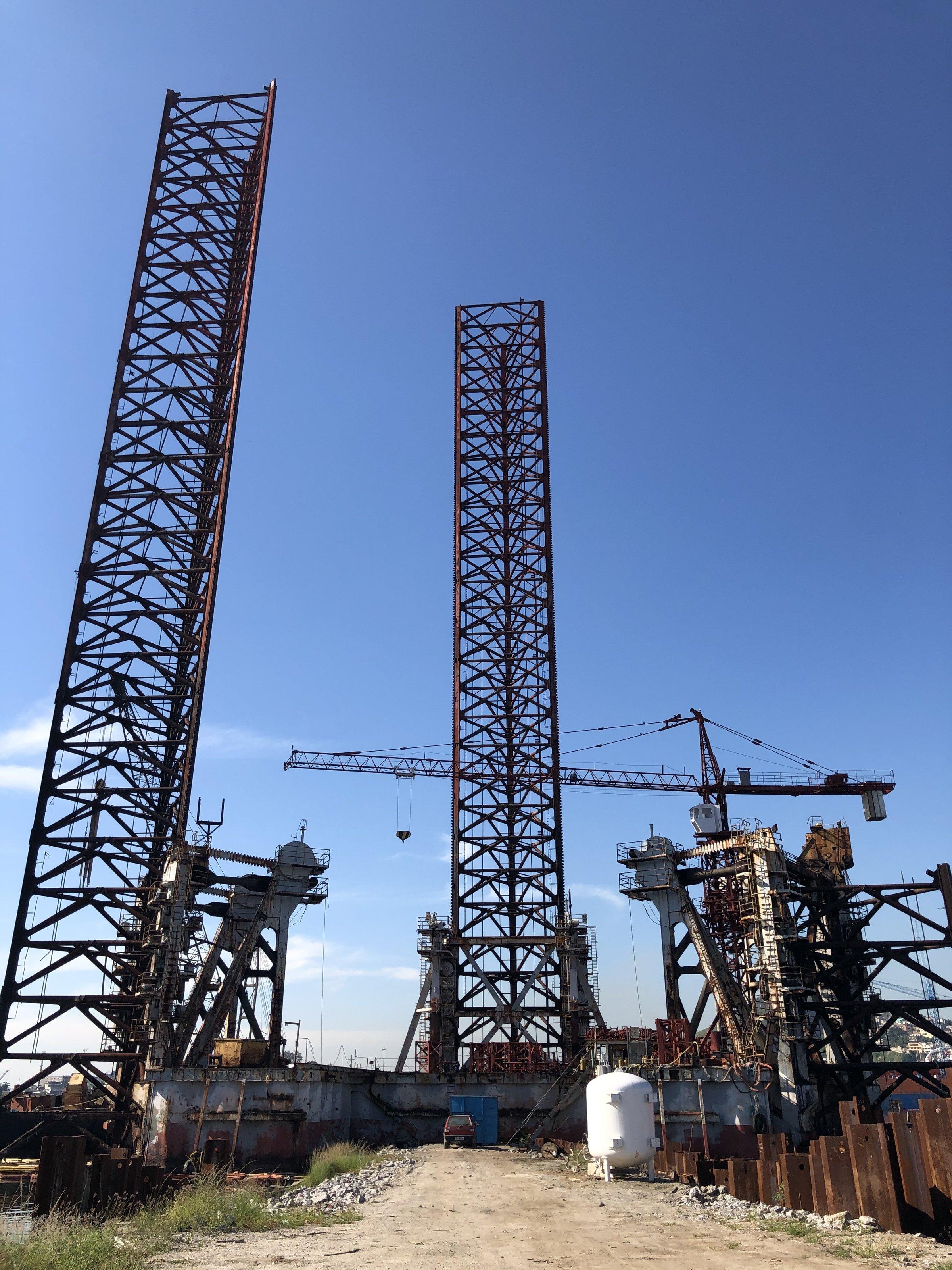
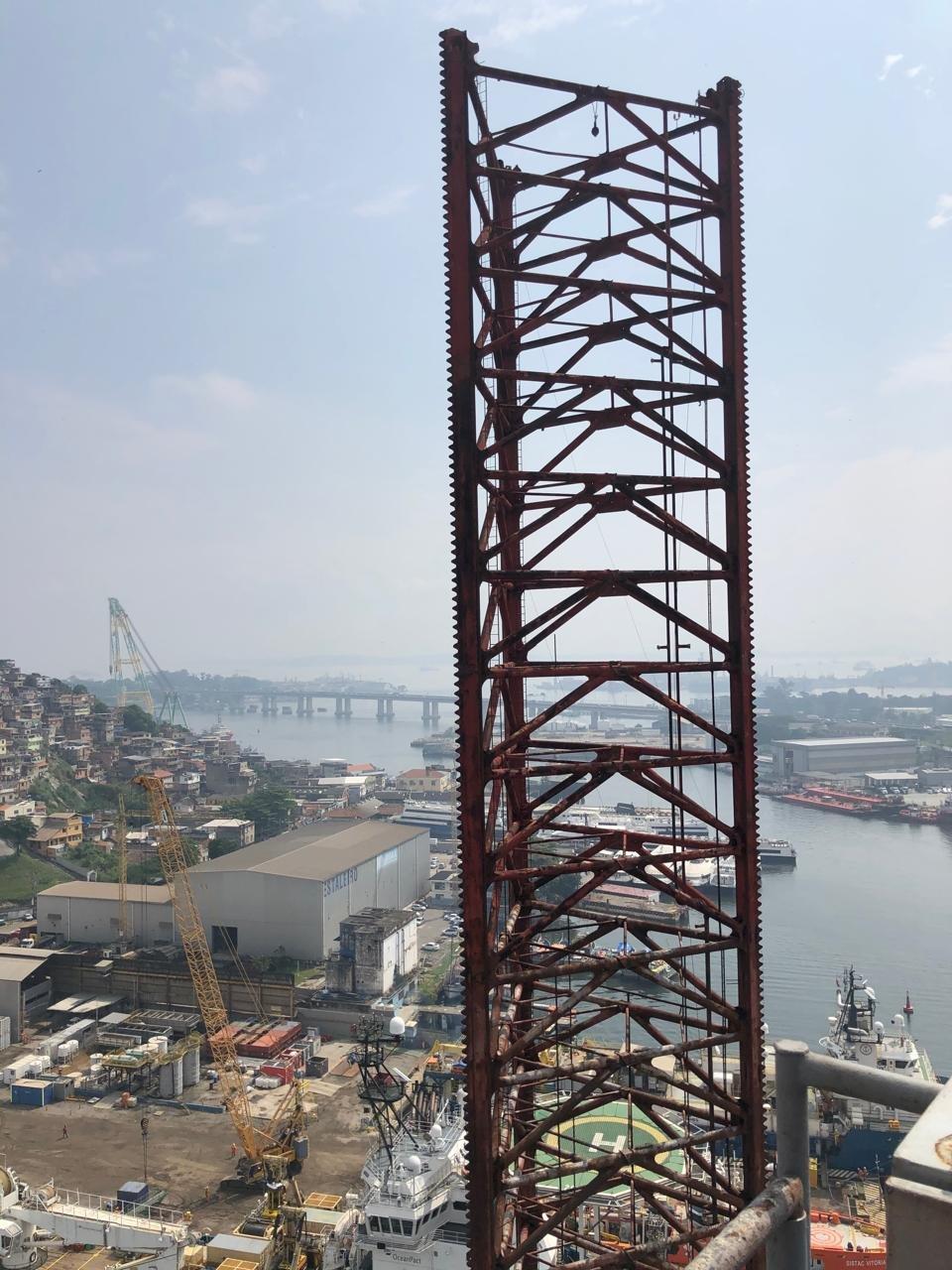
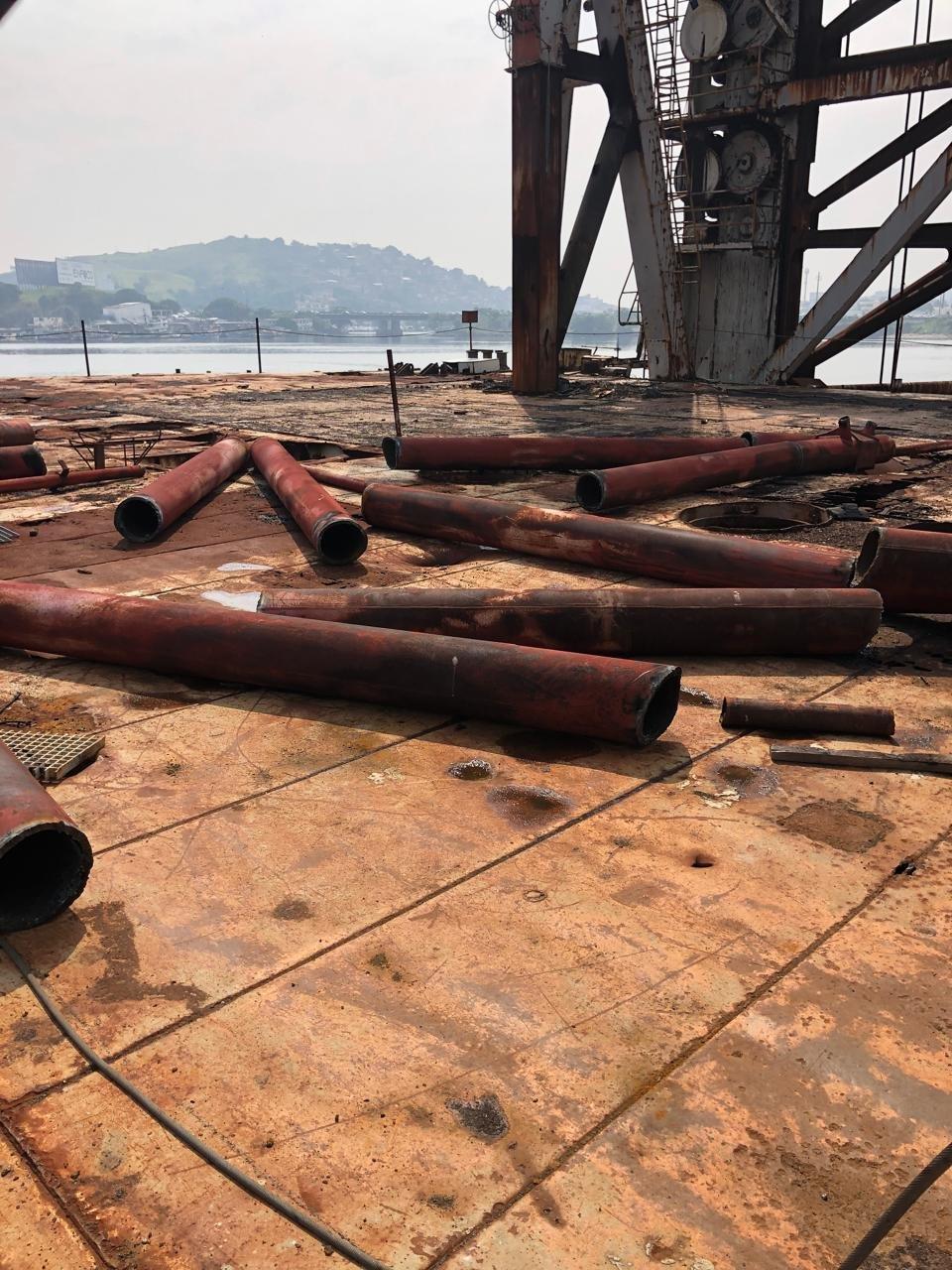
An element directly observable in the four published photographs.
A historical description received; not a continuous field record.
A retrospective visual interpretation used to support understanding.
3 considered in the reconstruction
This count is not presented as three legs demonstrably dismantled in the field.
Above-water only
This scope does not attest to underwater dismantling, final hull condition or complete asset closure.
Retrospective reading
Illustrative geometry and sequence; not a substitute for a survey, calculation or project-specific execution plan.
A historical narrative does not carry the same evidential weight as a photograph or a technical document. The reconstruction makes that distinction explicit.
The four images show visible configurations of the legs, tower crane and material sections on deck. Alone, they do not establish loads, the complete sequence or destination.
Asset identification records the builder, Hull 33, Class 300, year and IMO. These data do not validate lifting capacity or dismantling outcomes.
The account describes staged cutting, tower crane support, rigging and support before final cuts, torch work using industrial rope access and onshore segregation. These are practices reported for this history, not an authorized procedure for replication.
The model visually organizes that narrative. Positions, stages and relationships between parts are interpretations for understanding, not continuous field observations or a demonstration of stability.
Photographs retain their original framing. Metadata dates and file receipt dates have different meanings.
Only the four photographs shown on this page form the provenance-reviewed subset; other historical photographs remain outside that confirmation.
The 2021 dates come from metadata of the source files, not from embedded EXIF in the published JPEGs. The two 26.02.2026 dates are file-receipt dates, with capture dates unconfirmed.
The reach of each statement depends on the available basis.
| Information | Presented basis | Status |
|---|---|---|
| Builder, Hull, Class, year and IMO | Historical sheet incorporated into the case archive | Documented in the archive; not audited against an external register on this page |
| Legs and presence of a tower crane | Four published photographs | Visible in the reviewed subset |
| Cutting, rigging, torch work and rope access | Historical account received | Reported; not converted into an authorized procedure |
| Twin geometry and sequence | Retrospective reconstruction | Reconstructed; not a dimensional survey |
The retrospective twin is an external visual reading of the case. It does not establish a dimensional survey, center of gravity, stability or crane capacity; it is not a signed execution design or field authorization.
Without reconciled independent documentation, this page makes no claim of final destination, recovered tonnage, crane capacity or operating radius, center of gravity, stability, productivity, emissions or regulatory authorization. Images and the account do not fill these gaps.
Assessing a new asset requires current data, responsible technical professionals, a specific plan and applicable authorizations. Do not transpose the illustrated sequence to a real operation.
Talk to GSR about available data, scope boundaries and the evidence needed before defining a proposal.